
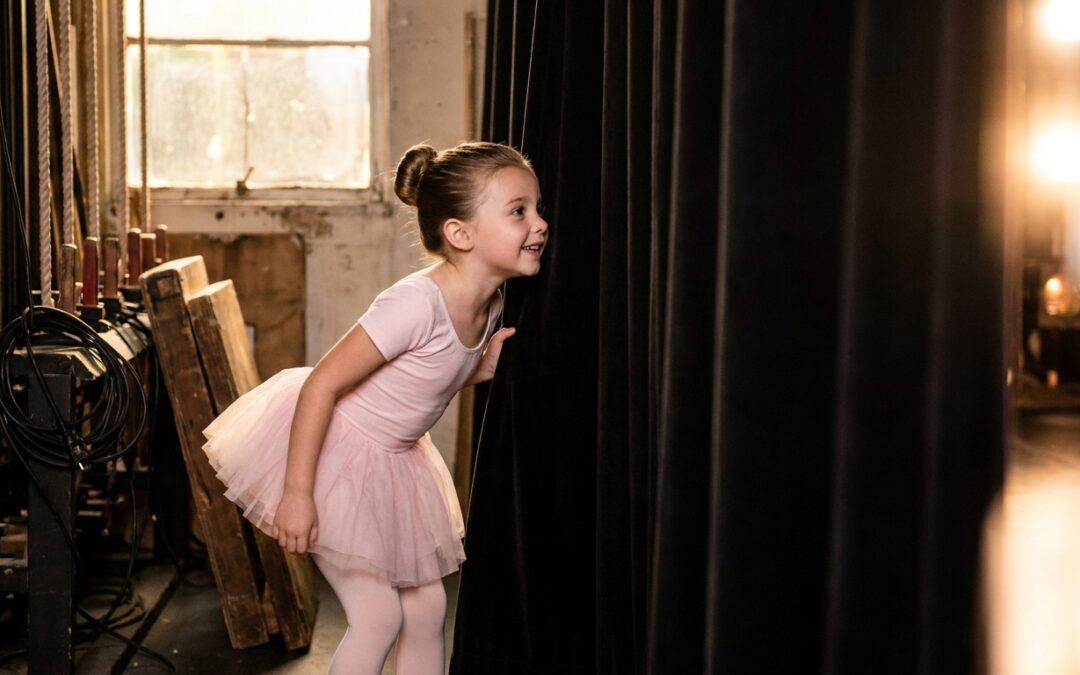
What Should You Expect at Your Child’s First Dance Recital?
Your child’s first dance recital, what to expect, comes down to this: a 2–3 hour community showcase, one proud moment on stage, and a whole lot of logistics in between. For families at Creation Talent Academy in Arcadia, the experience goes a step further: CTA’s end-of-season showcases combine dance, vocal performance, and theatre into a single multi-discipline event, so siblings in different programs all share the same stage night. That’s a different animal than the single-style recital most generic guides describe.
This guide fills the gaps those other guides leave open: local venue details, age-split prep, idol-track and vocal performance nerves, and the exact bag to pack for a warm June evening in the San Gabriel Valley.
How Long Does a Kids’ Dance Recital Actually Run?
Plan for 2–3 hours with an intermission for a full studio showcase. Toddler and preschool-only mini-recitals are shorter, typically 30–45 minutes, with each group piece running just 2–5 minutes. At a multi-discipline CTA showcase, the runtime reflects the full program, so it is common for the youngest dancers to perform in the first half so families with little ones can breathe easier after intermission.
| Format | Typical Runtime | Best Seating Strategy |
|---|---|---|
| Preschool / mini-recital | 30–45 min | Arrive 20 min early; aisle seat for quick exit |
| Full single-discipline recital | 2–2.5 hrs + intermission | Center section, 5–8 rows back for clear sightlines |
| Multi-discipline showcase (dance + vocal + theatre) | 2.5–3 hrs + intermission | Stay for the full show; plan dinner after |
CTA families performing at a venue like the Arcadia Performing Arts Center (188 Campus Drive, just off the 210 Freeway) benefit from on-site campus parking and tiered seating with clear sightlines from most sections. Doors typically open 60–90 minutes before curtain, so use that buffer rather than rushing.
What Is the Recital Timeline from Costume Order to Show Night?
The season calendar moves faster than most new parents expect. Costumes are ordered months ahead, often in January or February for a June recital, and arrive in April or May with a short fitting window. Costume fees are separate from tuition and typically run $60–$90 per costume. For a multi-discipline student enrolled in both dance and vocal or theatre, budget per program.
| Month | What Happens | Parent Action |
|---|---|---|
| Jan–Feb | Costume orders placed by studio | Confirm sizing; submit fees on time |
| Apr–May | Costumes arrive; fitting period | Try on; note any alterations needed |
| 4–6 weeks out | Dress rehearsal scheduled | Attend, it is the only stage run-through |
| 1 week out | Full costume/hair run-through at home | Do the whole look the night before show day |
| Show day | Arrive early; performance; photos | Pack the performance bag; silence your phone |
What Should Your Child’s Hair and Makeup Look Like?
For ballet and most classical dance numbers, a clean, slicked-back bun is standard. Start with damp hair, apply gel at the hairline to control flyaways, and use bobby pins generously, bring extras in your bag because they vanish. For jazz, hip-hop, or contemporary pieces, the instructor will specify; always follow the studio’s guidance over personal preference so the group looks unified on stage.
Stage makeup for children under 10 is usually light: a little blush, mascara, and a defined lip so features read under bright stage lighting. Teen performers in idol-track or theatre programs typically wear fuller makeup that matches their character or act. Ask your instructor at the dress rehearsal exactly what level of makeup is expected for your child’s number.
What Goes in a Dance Recital Bag for Parents?
Pack this bag the night before so show-day stress stays low:
- Extra tights, they rip at the worst moment
- Bobby pins and hairspray, a full can, not a travel size
- Safety pins, costume straps fail under stage lights
- Non-messy snacks, dried fruit, granola bars, or crackers; no sauces or juice that can stain a costume
- Water bottle, hydration is critical; no eating in full costume
- Printed recital packet, confirm your child’s act order and backstage call time
- Small cash, for flowers at the lobby stand post-show
- Phone charger, you will use your camera more than you think
How Do You Help a Child with First-Performance Nerves?
Nerves before a first recital are universal, but how you frame them matters. Nervousness and excitement produce almost identical physical sensations, fast heartbeat, butterflies, energy in the hands. Tell your child that feeling is their body getting ready to perform, not a sign something is wrong.
Give them a grounding cue: “When you walk out, find my face in the audience.” Knowing where a familiar face sits turns an intimidating sea of strangers into a direct connection. Practice this at the dress rehearsal if possible.
For vocal and idol-track students performing on a microphone for the first time, the nerves have an added layer: hearing your own amplified voice, dealing with in-ear monitors or stage monitors, and projecting to a live room. The best preparation is repetition in the actual space. If your child is part of CTA’s vocal training track, ask about open mic or pre-showcase run-throughs, the same principle that drives CTA’s broader philosophy of high-level, real-performance preparation, as seen in stories like Mystic Inscho’s journey from CTA to the global Idol stage.
What Are the Photography and Videography Rules at Recitals?
Flash photography is almost never acceptable during a live recital, it blinds performers mid-routine and disrupts the whole audience’s experience. Video recording is often discouraged or restricted when the studio is providing a professional recording; purchasing the studio’s video package is typically the better option and produces far better footage than a phone held above your head for two hours.
Always confirm the specific policy in your studio’s recital packet before show night. Assume no flash unless explicitly told otherwise.
Age-Specific Prep: Toddlers vs. School-Age Kids vs. Teens
- Ages 3–5: Keep the focus on fun, not perfection. These performances are group numbers, rarely solos, and the audience expectation is joy, not technique. Let them run through the dance at home a few times without pressure. If they freeze on stage, that is still a win, they walked out there.
- Ages 6–10: Children this age can handle more pre-show ritual: hair run-through the night before, a calm morning with a real breakfast, and a brief talk about what backstage will feel like. Most studios provide backstage supervision so parents are not needed in the wings.
- Ages 11–17 (teen showcase / competition debut): Teens often carry more performance anxiety than younger kids because they understand the stakes. Shift the conversation from “don’t mess up” to “show them what you’ve worked on.” CTA’s professional dance training partnership with KOD Arcadia is designed precisely to close the gap between studio rehearsal and real stage readiness for teen-level dancers.
Common Mistakes to Avoid
- Leaving right after your child performs. Empty seats are visible from the stage and disrespectful to the families whose children perform after yours. Stay for the full show or at least through intermission.
- Skipping the dress rehearsal. It is the only time your child learns the stage entrances, exits, lighting, and transitions before show night. Missing it creates real confusion on the day.
- Waiting until show morning to do the hair and costume. Run the full look the night before to catch problems, a bun that won’t hold, a costume zipper that sticks, tights that are the wrong size.
- Over-coaching in the car on the way there. Last-minute notes increase anxiety without improving performance. Keep the drive calm and positive.
- Assuming one costume covers all numbers. Multi-discipline students at a combined showcase may have a dance costume and a separate outfit for a vocal or theatre number. Confirm the full costume list well before show week.
- Bringing outside flowers or balloons backstage. Most studios restrict what can come into the wings. Plan to present flowers in the lobby after the performance.
Frequently Asked Questions
How early should we arrive at the recital venue?
Plan to arrive at least 30 minutes before the doors open, especially if you need to drop a child off backstage and still find seats together. For venues like the Arcadia Performing Arts Center, on-site parking fills up; arriving 45–60 minutes early gives you a parking buffer and time to read the program before curtain.
What should my child eat before a performance?
A real, balanced meal, not a sugary snack, two to three hours before showtime. Avoid heavy foods that can cause stomach discomfort under physical exertion. Once in costume, stick to small, non-messy snacks and water only.
Will my child have adult supervision backstage?
Most established studios, including CTA, provide trained backstage chaperones for every age group so parents can sit with the audience and actually enjoy the show. Confirm this detail with your studio’s recital packet, and ask at the dress rehearsal who to hand your child to and where.
When are costumes ordered and how much do they cost?
Costume orders typically go in January or February for a spring or June recital. Costumes arrive April or May. Per-costume fees commonly run $60–$90 and are billed separately from tuition. If your child is in more than one program, budget for each number’s costume individually.
Can I record my child’s performance on my phone?
Check your studio’s specific policy first, it varies. Flash is almost never permitted during a live performance. If the studio offers a professional video package, purchasing it typically produces better results than personal phone recording. Never use flash regardless of what other audience members are doing.