
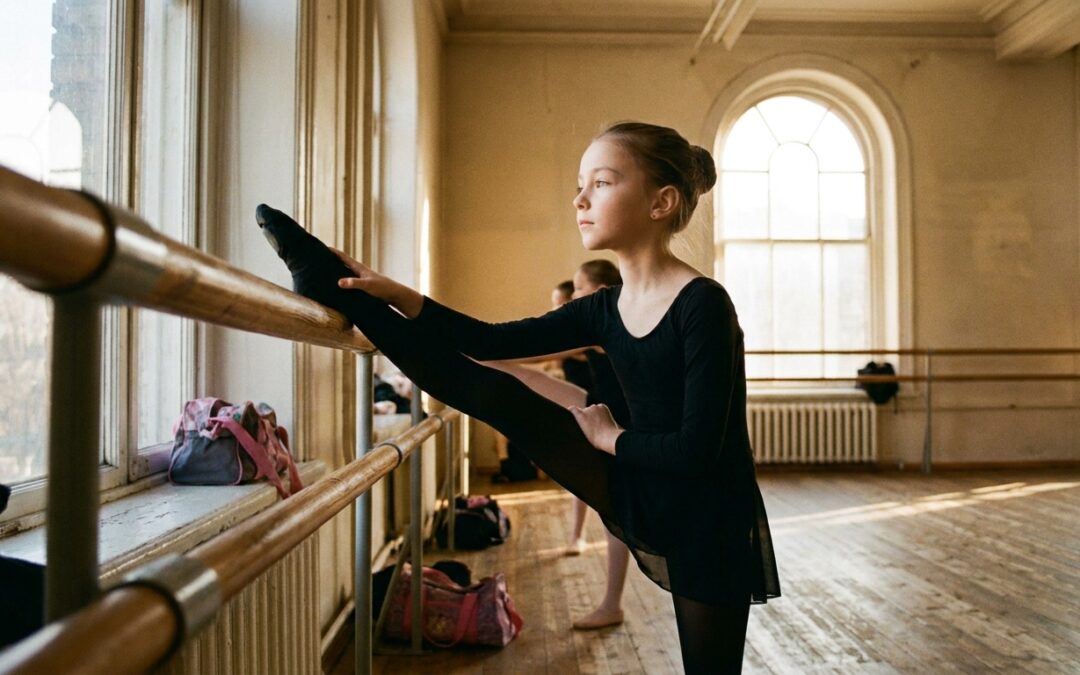
What Is Dance Competition Team Audition Prep for Kids, and Why Does It Start So Early?
Dance competition team audition prep for kids is the focused training, planning, and paperwork a dancer and family complete before trying out for a studio’s competitive company. In the San Gabriel Valley and greater Los Angeles area, most studios hold competition-team auditions in June or July for the season that begins in the fall, meaning preparation starts well before summer break.
Studios like LA Dance Academy have held mini-team tryouts as early as the first week of June, with elite and performance team auditions the same day. If your child wants to try out, spring is when you register for summer prep classes, confirm eligibility requirements, and gather documents like a birth certificate for first-time auditioners.
Is My Child Ready for a Competition Dance Team?
Readiness depends on age, focus level, and current training, not just talent. Here is what audition panels in the SGV typically evaluate, and what to honestly assess before paying an audition fee.
What Panels Look For by Age Group
| Age Group | Primary Criteria | Secondary Criteria |
|---|---|---|
| Ages 5–7 (Mini/Star) | Basic rhythm, willingness to follow directions, enthusiasm | Simple flexibility, spatial awareness |
| Ages 8–10 (Junior) | Ability to pick up choreography quickly, alignment, musicality | Flexibility, focus for a full session |
| Ages 11–14 (Teen) | Technical foundation (turns, leaps, extensions), performance connection | Coachability, consistency across styles |
| Ages 15+ (Senior/Elite) | Multi-style versatility, artistry, synchronization with others | Stage presence, competition history |
One practical readiness check for younger dancers: can your child stay focused through a 45-minute class without parental prompting? Most SGV competition auditions are closed to parents, so your child needs to take direction from an unfamiliar adult in a room full of peers.
The Age-Category Rule First-Time Parents Miss
Many studios place dancers in the age category they will be as of December 31 of the competition year, not their current age. A child who is 8 now but turns 9 before December 31 auditions in the under-10 group. Ask your specific studio to confirm its age cutoff before audition day; some follow a different governing body’s rules.
What Does the SGV Audition Timeline Actually Look Like?
Here is a practical month-by-month calendar for San Gabriel Valley families aiming for a fall competition-season start.
| Month | Action Item |
|---|---|
| March – April | Research studios; attend open houses; confirm summer camp or technique-class prerequisites |
| May | Register for summer intensive or required prep classes; gather birth certificate; submit audition application |
| Early June | Most mini/junior team auditions (LA Dance Academy and similar SGV-area studios hold tryouts around the first two weeks of June) |
| Late June – July | Additional studio auditions; results and placement notifications |
| July – August | Summer intensive and team orientation; costume measurements; season-fee payment plans begin |
| September | Regular season begins, weekly technique classes, rehearsals, and competition prep underway |
Many studios also require summer class attendance as a condition of audition eligibility, not just as optional prep. Completing those summer requirements before tryouts often means learning the audition combination in advance, which significantly improves a first-timer’s odds. At Creation Talent Academy in Arcadia, summer intensives are designed to sharpen exactly these skills; the CTA × KOD Arcadia professional dance training program launching this fall reflects that same high-level performance focus.
What Does Joining a Competition Team Actually Cost?
Monthly tuition is only the beginning. Before committing, map out every fee category below so there are no surprises in February when competition season opens.
- Monthly tuition: Competition-team tuition at many Southern California studios runs roughly $95–$280+ per month depending on how many classes per week are required. One Southern California competitive family reported paying $280 monthly for seven classes per week during the regular season.
- Annual registration fee: Typically $25–$50 per dancer, non-refundable.
- Costumes: Each routine requires its own costume; budget $80–$150+ per piece.
- Competition entry fees: Shared among team members but still add up across 2–4 competitions per season.
- Convention or workshop fees: Some elite teams add a national convention to the season calendar.
- Choreography fees: Studios that charge separately for routine choreography may bill $100–$450+ per piece depending on whether it is a group, duo, or solo.
Teams at the entry level (ages 5–7) typically compete in one regional competition per season, keeping costs lower. Elite teams commonly attend four regional competitions plus a national event, which significantly raises the travel and entry-fee total. Get an itemized season estimate from the studio director, in writing, before you sign.
Recreational vs. Competition: Which Path Fits Your Child?
Competition team is not the right fit for every dancer, and choosing the recreational track is not a consolation prize. Here is how to think through the fork honestly.
- Choose competition team if: your child talks about performing outside the studio, handles constructive criticism without shutting down, can commit to multiple weeknight rehearsals, and your family budget and schedule can absorb the full season cost.
- Stay recreational if: your child dances primarily for fun, reacts strongly to pressure, or your family has scheduling conflicts with Saturday competitions. Recreational classes build the same technical foundation, the path to competition team is always open later.
Pushing a child onto a competition team before they want the pressure is one of the fastest ways to end a dance career early. Studios with strong recreational programs, and honest placement guidance, serve families better in the long run. CTA’s student Mystic Inscho’s journey from CTA to the global idol stage is a reminder that readiness and the right environment matter far more than early-entry competition.
Audition-Day Checklist for Kids and Teens
- Attire: Form-fitting clothing that shows lines, no baggy tops or distracting accessories. A simple leotard and fitted shorts or leggings work for most styles.
- Shoes: Bring every style the audition requires, ballet slippers, jazz shoes, and tap shoes if listed. Some auditions evaluate multiple styles in one session.
- Hair: Pulled completely back and secured. A neat bun or ponytail keeps hair out of the face and shows professionalism.
- Documents: First-time auditioners are often required to bring a copy of a birth certificate. Confirm this with the studio before audition day.
- Arrive early: Check-in and warm-up begin at the scheduled start time. Arriving 15–20 minutes early lets your child stretch, adjust to the space, and calm nerves before the panel sees them.
- Water and snack: Auditions can run 60–90 minutes; a light snack and a sealed water bottle are standard.
- Parent plan: Many SGV studio auditions are closed to parents. Drop off, have a plan for the wait, and be ready to pick up promptly.
Common Mistakes to Avoid
- Skipping the summer prerequisite. Assuming summer classes are optional when the studio lists them as an eligibility requirement means your child cannot audition, no exceptions at most studios.
- Auditioning in the wrong age group. Using your child’s current age instead of their December 31 age can place them in the wrong category and affect results.
- Showing up in the wrong shoes. Arriving without the required footwear for every style being evaluated signals poor preparation to the panel before a dancer even moves.
- Underestimating the full season cost. Budgeting only for monthly tuition and getting blindsided by costume, entry, and travel fees in January is the most common reason families drop off competition teams mid-season.
- Treating a “no” as permanent. Not making the team this year is feedback, not a verdict. Specific notes from the audition panel, focused training, and a reaudit next season are the right response.
Frequently Asked Questions
When do competition team auditions happen in the San Gabriel Valley?
Most SGV and greater LA studios hold competition-team auditions in June or early July for the season beginning in September. Some studios schedule mini/junior team tryouts in early June and elite-team tryouts later the same month. Check studio websites in March to confirm dates before summer-class registration closes.
Do kids need prior competition experience to audition?
Not always. Many studios offer entry-level or “Star” teams specifically for children ages 5–7 with little or no competition background. These teams focus on building stage confidence and compete in one regional event per season. Elite teams typically require prior competition or at minimum two or more years of consistent technique training.
Why are dance competition team auditions closed to parents?
Studios close auditions to parents so they can see how a dancer performs without the safety net of a familiar face. It also gives the panel a realistic read on focus, coachability, and how the child responds to a new adult’s direction, all qualities that matter during competition weekends when parents are in the audience, not backstage.
What is a realistic total annual budget for a competition team dancer in the SGV?
Families should budget for monthly tuition ($95–$280+ depending on hours), annual registration ($25–$50), costumes ($80–$150+ per routine), competition entry fees across 2–4 events, and any convention or workshop costs. A conservative estimate for a junior-level dancer on a regional team runs $2,000–$4,000 for the full season when all costs are included; elite multi-competition seasons can run higher.
What if my child does not make the competition team?
Ask the director for specific, actionable feedback, which skills to develop and over what time frame. Enroll in the technique classes that directly address those gaps. Most well-run studios in Arcadia and the SGV offer a clear path from recreational to competitive, and dancers who train deliberately after a “no” often make the team the following season with stronger fundamentals.