
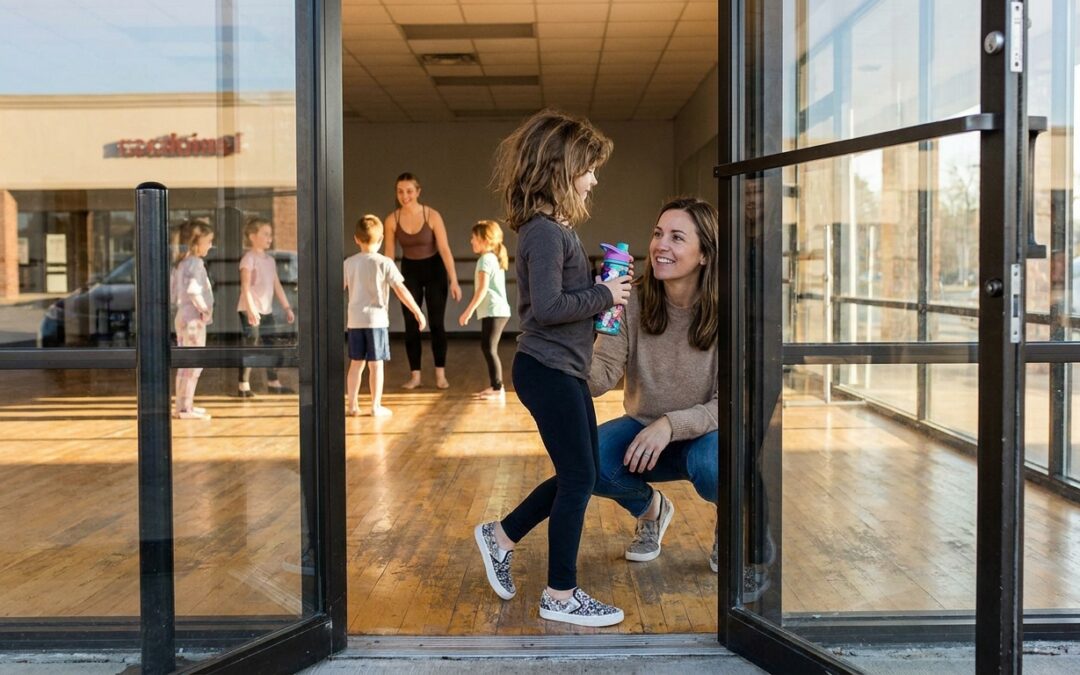
Is It Normal for a Child to Be Nervous About Their First Acting Class?
Yes, and it means nothing about their ability or whether they belong there. If your child is nervous about their first acting class, they are in very good company. Studies suggest up to 75% of children develop some form of performance anxiety, and research on how kids choose performing arts programs consistently shows that the studio environment matters far more than a child’s starting confidence level.
The goal is not to eliminate the nerves. Professional performers, including artists who have competed on shows like The Voice and American Idol, still feel them. The real goal is to help your child channel that nervous energy rather than be controlled by it. Performing arts teachers often describe this as getting the butterflies “to fly in formation” rather than scatter.
Understanding why the nerves happen makes them much easier to handle. Most childhood performance anxiety comes from not knowing what to expect, worrying about being judged, or feeling put on the spot, not from any lack of talent or readiness. Walk your child through what is actually going to happen in the room and most of that fear dissolves.
What Happens Minute-by-Minute in a First Kids’ Acting Class?
The biggest anxiety reducer is simply knowing the schedule in advance. Here is what a first session at a youth drama program, including the beginner acting classes at Creation Talent Academy in Arcadia, typically looks like:
- Minutes 0–10: Introductions and overview. The instructor introduces themselves, asks each student their name and one fun fact, and explains what the class will cover. Nobody is put on the spot for a performance here.
- Minutes 10–20: Physical and vocal warm-ups. Expect humming, tongue twisters, “shake it out” body movement, and breathing exercises. Instructors often say that in acting, your body is your instrument, warming it up is as essential as tuning a guitar before playing.
- Minutes 20–40: Improv and theater games. Games like “Yes, And,” mirroring, or freeze tag are designed to get kids laughing and moving together. Nobody is graded. There is no wrong answer in improv. This is where shy kids tend to relax fastest, especially in small groups.
- Minutes 40–55: Short scene or exercise work. Students may read a few lines, work on a short partner exercise, or watch the instructor model a technique. First-class students spend a significant portion of this segment watching their classmates and hearing brief, constructive feedback, observation is a legitimate part of learning.
- Last 5 minutes: Wrap-up and preview. The instructor summarizes what was covered and hints at what is coming next week, giving anxious students something concrete to look forward to.
Knowing this arc before they walk in turns “I don’t know what will happen” into “I know what to expect.” That shift alone is often enough to get a hesitant child through the door.
How Do You Prepare a Child for Their First Acting Class? (Age-by-Age)
A nervous 6-year-old and a self-conscious 13-year-old need entirely different reassurance. Here is a practical breakdown:
Ages 5–7: Make It Playful, Not Pressured
Young children are almost entirely driven by whether something sounds fun. Avoid framing the class as “learning” or “performance.” Instead, tell them they are going to play pretend games with a teacher who does it professionally. Do a mini dress-rehearsal at home: let them perform a silly story for you, a sibling, or a pet. The audience doesn’t matter, the experience of performing for someone safe before performing for anyone new is what builds the initial courage.
On the day of class, pack a water bottle and put them in comfortable, movement-friendly clothing, leggings, joggers, or sweats, with slip-on shoes they can kick off easily. Arrive five to ten minutes early so the room doesn’t feel unfamiliar when other kids start filing in.
Ages 8–11: Give Them the Blueprint
Kids in this range respond best to specifics. Walk through the class structure above with them the night before. Let them ask “what if” questions and answer them honestly: “What if I forget what to say?” → “The teacher will help you, and everyone forgets sometimes. That’s what the warm-up games are for.” Avoid dismissive reassurances like “you’ll be fine” or “don’t worry about it”, research on childhood anxiety shows those phrases can make a child feel their concern isn’t valid, which increases, not reduces, anxiety.
A useful at-home tool is box breathing: inhale for 4 counts, hold for 4 counts, exhale for 4 counts. Practice it together a few times the morning of class so it feels automatic when nerves kick in during the real thing.
Ages 12–18: Respect the Self-Consciousness
Teenagers are acutely aware of how they appear to peers, and that awareness is the primary driver of their nerves. The most effective thing you can do is validate the feeling without amplifying it. Acknowledge it, then redirect: “Yes, it’s a little awkward meeting a new group. What’s the one thing you’re most curious about?” Shifting the focus from fear to curiosity changes the emotional charge.
Teen beginners also respond well to knowing they will not be singled out or judged on day one. Remind them that improv games have no wrong answers, and that a first class is about exploring, not auditioning. At CTA, the teen acting program is led by working industry professionals who understand how to create a low-judgment environment, because they have navigated that exact pressure themselves.
At-Home Preparation Checklist vs. What to Skip
| DO before the first class | SKIP (it backfires) |
|---|---|
| Walk through the class structure with your child | Overloading them with acting tips or YouTube tutorials |
| Practice box breathing together (inhale 4, hold 4, exhale 4) | Saying “just calm down” or “it’s not a big deal” |
| Let them perform something silly at home for family | Praising only flawless execution, praise showing up |
| Pack water, wear movement-friendly clothes, arrive early | Hovering at the window or checking in mid-class |
| Loop in the instructor about any specific worries beforehand | Comparing them to a sibling or friend who “loved it right away” |
| Plan something low-key and fun for after class | Asking “so, were you the best one?” on the drive home |
Should You Stay or Drop Off on Day One?
This is the question most San Gabriel Valley parents wrestle with most, and the answer depends on your child’s age and what your studio allows. At CTA’s Arcadia studio, the general guidance mirrors what child development researchers recommend: for ages 5–7, a brief goodbye at the door (rather than a lingering farewell) helps. Extended goodbyes signal to young children that there is something to be uncertain about. For ages 8 and up, a standard drop-off is almost always fine.
If your child flatly refuses to go in, avoid the instinct to negotiate endlessly or agree to skip the class. Research consistently shows that allowing avoidance gives anxiety more power, not less. Instead, stay calm, acknowledge the feeling briefly (“I hear you, it feels scary”), and then move forward: “Let’s go meet the teacher together.” A good instructor will take it from there.
If your child participates minimally the first day, sits back, watches more than joins, that is still a productive first class. Watching peers and hearing feedback is an acknowledged part of the learning process. Do not measure success by how much they performed on day one.
How Does Class Size Affect a Nervous Child?
Class size is one of the most under-discussed factors for anxious beginners, and it is where local studio choice genuinely matters. At Creation Talent Academy in Arcadia (1229 S. Baldwin Ave.), youth drama and acting classes run with just 4 to 8 students. For a child who is nervous about being put on the spot in front of a big group, that number changes everything.
| Class size | Experience for a nervous beginner | Instructor attention per student |
|---|---|---|
| 4–8 students (CTA Arcadia) | Peer group feels like a small friend circle; instructor knows each child’s name and comfort level by week two | High, adjustments happen in real time |
| 12–20 students (typical large studio) | Easier to hide, but also easier to feel lost or overlooked | Moderate, difficult to individualize |
| 20+ students (big-box program) | Can feel impersonal; anxious children may disengage or refuse to participate | Low, group-pace instruction only |
Small classes also mean your child’s instructor can loop in specific encouragement rather than generic praise, a key differentiator for building genuine confidence rather than just surface-level reassurance.
What If My Child Has Special Needs or Heightened Anxiety?
Some children need more than reassurance and a small class, they need a program that is intentionally structured for diverse learners. CTA’s Specially Designed Programming (SDP) serves students with learning differences, sensory sensitivities, and social-emotional needs alongside general enrollment students. Before the first session, contact the studio directly to introduce your child’s needs. A good instructor will keep your child’s comfort level in mind and adjust expectations or pacing accordingly, and at CTA, that communication is built into the intake process.
How Does a Free Trial Class Reduce First-Class Fear?
The single most effective way to de-risk a child’s nerves is to remove the stakes entirely. CTA offers a free first trial class, which transforms the calculus from “what if they hate it and we’ve already committed” to “let’s just see how it feels.” For hesitant children, framing it this way works: “We’re just going to check it out. If you don’t want to go back, you don’t have to.” That removes the pressure to perform perfectly on day one and makes trying feel safe.
Families across the San Gabriel Valley, from Arcadia and Monrovia to Pasadena, can book that trial class and see the studio environment, meet the instructor, and let their child experience the warm-up games before any commitment is made. You can also read about how students like Mystic Inscho grew from a CTA beginner into a global-stage competitor, the kind of long arc that starts with exactly the kind of nervous first day your child might be facing right now.
CTA serves students ages 5–18 across acting, vocal training, and dance. If your child’s nerves are also tied to wondering which type of class to try first, the youth acting program page and the vocal training program both outline what beginners can expect session by session.
Common Mistakes to Avoid
- Dismissing the nerves. Telling your child “you have nothing to be scared of” invalidates their experience and can make the anxiety worse, not better.
- Over-preparing with skills they don’t need yet. First-class students don’t need memorized monologues. Warm-up games require nothing except showing up.
- Measuring success by visible performance on day one. Watching, listening, and trying one game counts as full participation for a nervous beginner.
- Choosing a class primarily for convenience, not fit. A child who is already anxious will struggle more in a 25-student room than a 6-student one, even if the big studio is closer.
- Staying visible during class. Hovering at the window or re-entering to check in signals to your child that the room is not yet safe on its own, it prolongs separation anxiety rather than resolving it.
- Asking competitive questions afterward. “Were you the best?” or “Did anyone mess up?” puts performance anxiety directly into the debrief. Ask open questions instead: “What game did you play?” or “Did anything surprise you?”
- Letting one hard day become a permanent exit. Anxiety decreases with repeated positive exposure. One uncomfortable session is not a signal to quit; it is part of the arc.
Frequently Asked Questions
What should my child wear to their first acting class?
Comfortable, movement-friendly clothing is all that is needed: leggings, joggers, or athletic pants, a t-shirt or sweatshirt, and slip-on shoes or sneakers. Avoid stiff jeans, dress shoes, or anything that restricts movement during warm-ups and improv games. Pack a water bottle and, if your child likes it, a small snack for after class.
How long does it take for a shy child to warm up in acting class?
Most shy beginners start visibly relaxing within two to four sessions, once the classroom routine becomes predictable and they recognize their peers’ names. In very small classes (4–8 students), that comfort typically arrives faster because the peer group feels manageable rather than overwhelming. Occasionally a very introverted child takes six to eight weeks, that is still within the normal range.
Should I tell the acting teacher that my child is nervous?
Yes, and do it before the first class, not during drop-off. A brief email or a quick word with the studio’s front desk lets the instructor calibrate their approach from the start, adjusting when they call on your child, pairing them with a supportive peer in partner exercises, and checking in quietly rather than publicly. Good instructors welcome this information.
Are youth drama classes in Arcadia right for kids who are extremely shy, not just a little nervous?
Yes, often especially so. Acting class is specifically designed to build comfort with being seen, in a low-stakes, game-based format. Very shy children frequently thrive in small-group drama programs because the skills taught, listening, responding, and taking turns, are the same skills that help in everyday social situations. At CTA in Arcadia, the 4–8 student class size and availability of Specially Designed Programming make it a strong option for kids who need extra support easing in.
What is the difference between a child’s first acting class and an audition workshop?
A first beginner acting class has no audition, no expectation of prior skill, and no competitive component. The session is structured around exploration, play, and learning to use your body and voice as expressive tools. An audition workshop, by contrast, prepares students who already have some training to compete for roles or spots in competitive programs. If your child is a nervous first-timer, a beginner class is the right starting point, audition prep comes later, once they have built comfort and technique.