
What Are Improv Classes for Kids in Arcadia, and Are They Right for Your Child?
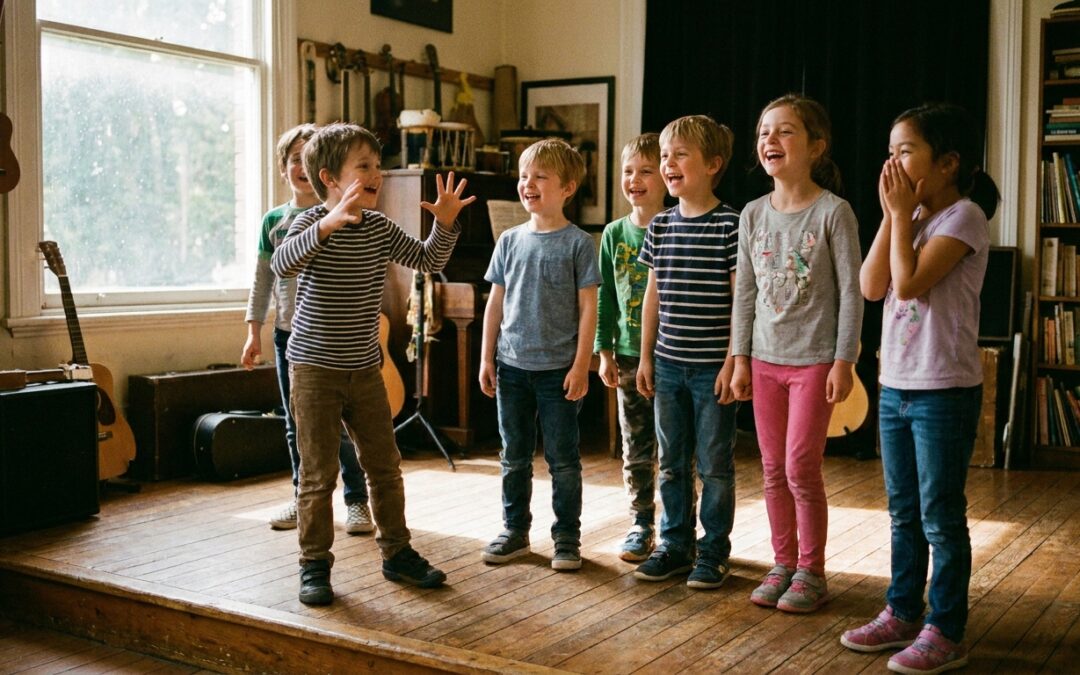
Improv classes for kids in Arcadia teach children to create scenes, characters, and stories on the spot, no scripts, no memorized lines, no prior experience required. The format is built around theatre games and short, collaborative exercises, which means a six-year-old with zero stage background can walk in on day one and fully participate alongside a more experienced ten-year-old.
If you are searching for a performing arts activity that builds real skills without the pressure of a scripted production or a formal audition to get in the door, improv is one of the strongest options available to SGV families right now. Here is everything you need to decide whether it fits your child.
What Does a First Kids’ Improv Class Actually Look Like?
Most beginner kids’ improv classes in the San Gabriel Valley follow a structure rooted in Viola Spolin’s theatre games. Spolin is widely considered the mother of improvisational theatre, and her approach centers on giving players a specific problem to solve together rather than a script to recite. The result is that kids are thinking, responding, and creating, not memorizing.
A typical 60-minute session for ages 6–12 moves through three phases:
- Warm-up games (10–15 min): Name games, sound-and-motion circles, and simple mirroring exercises that get kids physically loose and focused on each other.
- Short-form improv games (30–35 min): Structured games with clear rules, “Yes, And” scenes, freeze-tag scenes, one-word stories, where every player’s idea gets accepted and built upon. There are no wrong answers.
- Reflection and cool-down (10 min): A brief discussion of what worked, what was funny, and what players want to try next time. This is where a lot of the social-emotional learning gets named and reinforced.
There is no performance pressure in early sessions. The goal is ensemble play: kids contribute without dominating, and they learn to listen and respond before they worry about being funny. Many programs in the Arcadia and Pasadena area culminate in a low-key family showcase at the end of a session, a chance for kids to show what they built, not to be judged on polish.
What Are the Real Benefits of Improv for Children?
The benefits most frequently cited by educators and child development researchers fall into five areas, all of which transfer directly to school, friendships, and future auditions:
- Confidence: Improv asks kids to take risks and communicate their ideas in a supportive setting. As they become more comfortable, that willingness to try transfers outside the studio.
- Active listening and focus: To succeed in any improv game, a child must stay present and listen attentively to their scene partner, not just wait for their turn to talk. This is a practiced skill, and it shows up in the classroom.
- Creative problem-solving: Unscripted scenes require kids to think quickly and generate original ideas under gentle pressure. There is no right or wrong answer, which lowers the stakes and unlocks real creative thinking.
- Social-emotional learning (SEL): Improv cultivates empathy and perspective-taking naturally, because players have to inhabit characters different from themselves and respond to whatever their scene partner creates. Kids learn to manage emotions, support others, and read the room.
- Ensemble skills: The improv principle of “bring a brick, not a skyscraper” teaches children to contribute meaningfully without taking over. This translates directly to group projects, sports teams, and every collaborative situation they will encounter.
One less-discussed benefit: improv trains kids to treat mistakes as useful information rather than failure. Because every “wrong” move in a scene can be accepted and redirected by the group, children stop fearing errors and start experimenting. That mindset shift is one of the most lasting things a young performer can carry into auditions, school performances, and beyond.
Is Improv a Good Fit for a Shy Child?
Yes, and arguably a better fit than scripted acting for many shy kids, at least as a starting point. Here is why: in a scripted class, a shy child is visible and identifiable as “the one with the small voice.” In improv, every child is working through a character or a game, which creates a layer of protective distance. When kids step into a character, they often set aside the self-consciousness that normally holds them back. The shyness does not disappear on day one, but it tends to recede steadily as the group dynamic becomes familiar and safe.
What to look for if your child is shy or socially anxious:
- Small class sizes: A group of 6–10 kids is far less overwhelming than a large ensemble. Ask the studio specifically how many students are in a typical session.
- No forced participation early on: A good instructor lets shy kids observe for a round before they step in. Ask whether there is a warm-up period or whether kids are called on cold.
- Ensemble-based games first: Shy kids thrive when the spotlight is shared, circle games and group scenes are gentler entry points than two-person scenes in front of the class.
- A consistent cohort: Drop-in formats work well for outgoing kids but can reset a shy child’s comfort level every week. A session-based class (8–12 weeks, same group) builds the trust that unlocks participation.
If your child is already working on stage fright in other contexts, the post My Child Is Nervous About Their First Acting Class covers the specific emotions and logistics worth thinking through before any first day.
Is Improv Right for a High-Energy or Strong-Willed Child?
Absolutely, with one important consideration. High-energy kids love improv because the format rewards quick thinking, physical expression, and big ideas. But those same kids sometimes struggle with the “brick, not a skyscraper” principle: waiting, listening, and building on someone else’s idea rather than redirecting every scene toward their own vision.
What to look for for a high-energy or strong-willed child:
- Clear game rules: Short-form games with defined structures give energetic kids a channel for their enthusiasm rather than a free-for-all that leads to chaos.
- An experienced instructor who redirects positively: Look for a teacher who can harness energy rather than suppress it, someone who gives a big personality a leadership role within the ensemble rather than consistently pulling them back.
- Physical games: Freeze tag scenes, sound-and-motion games, and any format that gets kids moving keep high-energy players fully engaged.
- A pathway to more challenge: Strong performers outgrow beginner improv quickly. A program with clear advancement levels, beginner games, short-form performance, sketch writing, keeps motivated kids progressing.
How Does Improv Fit Into a Broader Acting or Musical Theatre Training Path?
This is the angle most local program listings miss entirely: improv is one of the best on-ramps into scripted acting and musical theatre, not a standalone hobby. Here is why that matters for SGV families planning a longer training path.
Scripted acting and musical theatre require a child to hold text in memory, hit specific blocking marks, and deliver consistent performances under pressure. Those skills feel enormous for a beginner. Improv builds the foundational layer underneath all of them: listening to scene partners, staying present, accepting and building on unexpected moments, and performing in front of an audience without a safety net. A child who has done even one semester of improv walks into their first scripted acting class with a muscle memory for stage presence that would otherwise take months to develop.
At Creation Talent Academy in Arcadia, the acting track is structured in progressive levels, from Discovery (ages 4–6, new to performing arts) through foundational and advanced tracks, with phase assessments at each stage. Improv-style scene work and theatre games are embedded throughout the early levels precisely because they build the responsiveness and confidence that scripted work demands later. If your child starts with improv and takes to it, the natural next step is the full acting program; if they are already in acting classes, adding improv training deepens the skill set faster than additional scripted rehearsal alone.
For a deeper look at where musical theatre fits into that progression, see Youth Musical Theater Classes in Arcadia: A San Gabriel Valley Parent’s Complete Guide.
Improv Class Formats Compared: What to Expect at Each Level
| Format | Best Age Range | Structure | Showcase? | Best For |
|---|---|---|---|---|
| Beginner theatre games / Spolin-based | 6–9 | Ensemble circle and group games, no two-person scenes | Optional family showing | First-time students, shy kids, kinesthetic learners |
| Short-form improv class | 8–12 | Structured games (“Yes, And” scenes, one-word stories, freeze tag) | End-of-session showcase | Kids with some group-class experience, high-energy performers |
| Tween/teen improv and sketch | 9–16 | Short-form games plus scene-writing and original material | Full public-facing show | Kids targeting audition confidence, comedy interest, or content creation |
| Summer improv intensive / camp | 6–16 (split by age group) | Daily full immersion across games, scenes, and optional sketch writing | End-of-week performance | Accelerated skill-building, audition prep, first-time tryout of improv |
How to Choose an Improv Class in Arcadia or the San Gabriel Valley: A Decision Checklist
Once you have identified a few programs, use these questions to compare them side by side. The answers will surface meaningful differences that Yelp reviews and studio websites rarely spell out.
| Question to Ask | What a Strong Answer Looks Like | Red Flag |
|---|---|---|
| How many students per class? | 6–10 for younger kids (6–9), up to 12–14 for tweens/teens | 20+ students with one instructor |
| Is this drop-in or a committed session? | Session-based (8–12 weeks, same group) for beginners and shy kids | Drop-in only with no cohort continuity |
| What curriculum framework does the instructor use? | Viola Spolin theatre games, short-form game sets, named pedagogical approach | “We just play games” with no structured progression |
| Does the class end in a showcase or performance? | Yes, family-facing showcase, even an informal one, at session end | No performance component at any point |
| What are the instructor’s credentials? | Training in theatre education, improv performance, or youth performing arts | Credentials unclear or instructor primarily adult-focused |
| Is there a trial class available? | Free or low-cost trial before committing to a full session | Full upfront payment required before any class observation |
| How are age groups divided? | Separate groups for 6–8, 9–12, and 13+ at minimum | Wide age mix (6–14 in one room) with no differentiation |
What About Summer Improv and Acting Camps Near Arcadia?
Summer is the ideal time for a first-time improv experience. The lower-stakes, camp-style environment removes the social pressure of a school year, and daily immersion compresses months of once-a-week progress into a single week or multi-week intensive. Look for programs that separate age cohorts clearly (6–8, 9–12, 13+), include both games and scene work in the same day, and cap off the week with a performance for families.
For SGV families evaluating summer options across acting, dance, and voice, the guide Performing Arts Summer Camp in Arcadia: A San Gabriel Valley Parent’s Complete Guide breaks down what to compare when choosing between programs. Creation Talent Academy’s summer program in Arcadia runs in cohorts kept small by age group, with working-professional instructors and a showcase built into the final days.
Common Mistakes to Avoid
- Choosing drop-in over session-based for a shy child. A new group every class resets the trust a shy child needs to participate fully. A consistent cohort over 8–12 weeks is far more effective.
- Enrolling too young in a tween/teen format. A six-year-old in a sketch-writing class built for 12-year-olds will disengage fast. Age-band separation matters more in improv than in most other performing arts formats.
- Expecting comedy from week one. Beginners focus on listening, accepting, and building, the funny comes later, as a byproduct of those skills. If an instructor is pushing young kids toward punchlines in week two, the pedagogy is backwards.
- Skipping the trial class. Improv is highly instructor-dependent. The teacher’s energy, patience, and ability to redirect without embarrassing a child matters more than the studio’s branding. Always observe or trial before committing to a full session.
- Treating improv as a one-and-done activity. One semester of improv is a strong foundation. But the confidence, listening, and ensemble skills deepen significantly over two or three sessions, and transfer powerfully into scripted acting, auditions, and musical theatre.
- Overlooking improv as audition prep. SGV parents focused on auditions often jump straight to scripted monologue coaching. Improv builds the spontaneity, ease under pressure, and scene-partner responsiveness that actually win rooms.
Where Does CTA Fit for Arcadia and SGV Families?
Creation Talent Academy is Arcadia’s conservatory-style performing arts academy for ages 5–18, with programs in acting, singing, dance, and martial arts for film. The acting track is structured in clear levels, from the Discovery stage for ages 4–6 all the way through advanced project work and industry showcase, so improv-style scene work and theatre games are built into the foundation of the curriculum rather than treated as a separate add-on.
Classes at CTA run in groups of 4–8 students, which is smaller than most SGV studio programs and particularly well-suited to the shy or first-time child who needs room to find their voice before the group grows. Instructors include working film and television actors, Broadway performers, and faculty trained at institutions like the New York Film Academy. New students can book a free trial class before committing to a full program.
If your child is also exploring vocal training alongside acting, the Singing Lessons for Kids in Arcadia: A San Gabriel Valley Parent’s Guide explains how CTA’s voice program is structured and what age and level it suits best.
Frequently Asked Questions
What age can kids start improv classes in Arcadia?
Most local programs in Arcadia and the San Gabriel Valley offer beginner-level improv for children starting around age 6. At that age, the curriculum is almost entirely game-based and physical, with no expectation of sustained scene work. Tween and teen tracks typically start at 9 or 10 and introduce short-form scene structure and, at the advanced level, sketch writing. Younger children (ages 4–5) are generally better served by a broader introductory acting or theatre class before moving into a dedicated improv format.
Do kids need acting experience before joining an improv class?
No. Beginner improv classes are specifically designed for children with zero prior acting experience. In fact, kids who have not learned to rely on a script often adapt to improv’s “Yes, And” listening structure faster than children who are used to memorizing lines. The only real prerequisite is the ability to take turns and follow basic group instructions, which most children over six can manage.
How is improv different from a standard kids’ acting class?
A scripted acting class asks children to memorize and reproduce text, hit specific blocking marks, and build a consistent performance over multiple rehearsals. Improv removes the script entirely: every scene, character, and story is invented in real time by the ensemble. This makes improv lower-pressure for beginners but also a distinct skill set. Many working actors and performing arts educators recommend combining both, improv builds spontaneity and listening, while scripted work builds precision, stamina, and text interpretation.
Will improv actually help my shy child, or will they just freeze up?
Shy children rarely freeze in well-run beginner improv classes, for a specific reason: the games provide a structure and a character to hide behind. When a child is playing a game with clear rules, or inhabiting a character, the self-focused anxiety that causes freezing tends to recede because attention shifts outward. The key variables are class size (smaller is better), instructor approach (patient and non-coercive), and cohort consistency (same group every week). Freezing is most likely in oversized classes with a drop-in format and an instructor who cold-calls students.
How does improv help with audition preparation?
Improv builds the three qualities that casting directors consistently respond to in young performers: presence (being fully in the moment rather than thinking about what comes next), responsiveness to scene partners (essential in any scripted audition scene), and the ability to recover gracefully from unexpected moments without breaking character. Kids who train in improv before auditions handle redirects, cold reads, and callback surprises far more confidently than those who have only drilled scripted material. At CTA, the acting program integrates improv-based scene work specifically to prepare students for those real-world audition conditions.